
Este artículo trata sobre sustancias psicoactivas destinadas a adultos (18+). Consulta a un médico si tienes alguna afección o tomas medicación. Nuestra política de edad
How to Use a Bong
Definition
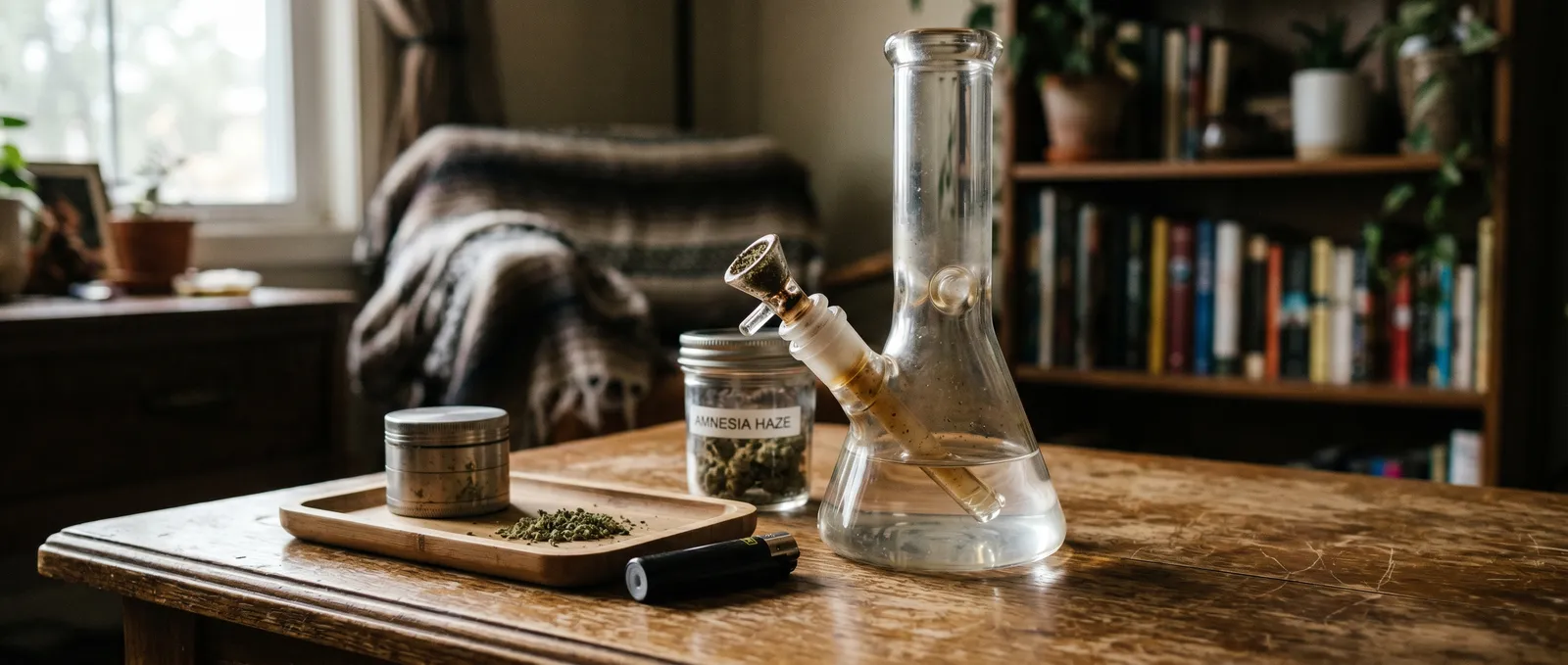
A bong is a water-filtration device that cools and filters smoke before inhalation. Research by Rickert et al. (2000) found water filtration reduced cytotoxin concentration by roughly 90% compared to unfiltered methods. This guide walks through each step — packing, lighting, clearing — and covers common mistakes that lead to harsh, wasted hits.
18+ only — This guide is written for adults. The techniques and information below apply to adult users only.
A bong is a water-filtration device that cools and filters smoke before inhalation by passing it through a submerged downstem. The basic principle hasn't changed much since the first bamboo water pipes appeared in Southeast Asia centuries ago: smoke passes through a water chamber, which cools it and traps a portion of particulate matter. A 2000 study by researchers at the University of Texas found that water filtration reduced the concentration of cytotoxins in smoke by roughly 90% compared to unfiltered methods (Rickert et al., 2000). Knowing how to use a bong properly — packing, lighting, clearing — makes the difference between a smooth draw and a coughing fit that puts you off the whole thing.
Below is a step-by-step walkthrough. If you've never held one before, you'll be sorted in about five minutes. If you've been doing it for years and still cough every time, there's a decent chance one of these steps is where things go sideways.
Anatomy of a Bong: Know What You're Looking At
Every bong has five core components regardless of material — bowl, downstem, water chamber, tube, and carb hole. Before you fill anything or light anything, get familiar with the parts. Every bong — glass, acrylic, ceramic, silicone — shares this same core anatomy:
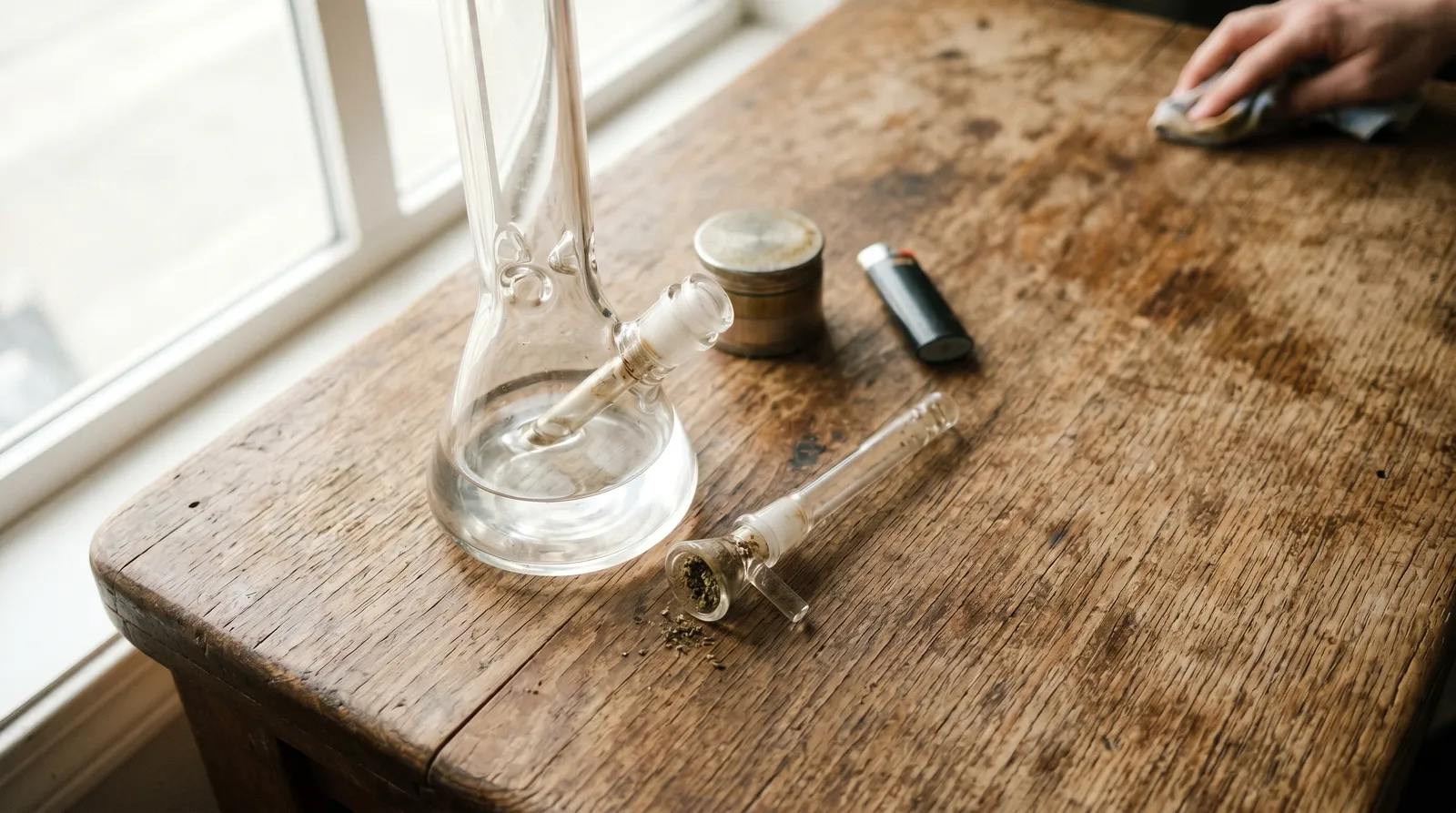
- Bowl (slide): The removable cup where you pack your dry herb. Usually sits in the downstem at an angle.
- Downstem: A tube that connects the bowl to the water chamber. The bottom of the downstem sits submerged. Some bongs have a fixed downstem with slits; others use a removable glass tube.
- Water chamber (base): The main body where water sits. This is where filtration happens.
- Tube (neck): The vertical cylinder you inhale from. Smoke travels up through here after passing through the water.
- Carb hole (optional): A small hole on the side of the chamber, covered with your finger during the draw and released to clear the smoke. Many glass bongs skip this — you pull the bowl out instead to clear. Acrylic bongs almost always have a carb.
If your bong has a percolator — an extra filtration chamber with small holes or slits inside the neck — that adds another stage of water contact. More bubbles, cooler smoke, slightly more drag.
Step 1: Fill the Water Chamber
The ideal water level submerges the bottom of the downstem by about 1–2 cm — no more. Pour room-temperature water into the tube until you reach that mark. That's it. You don't need much. Too little water and the smoke doesn't filter. Too much and you'll get a mouthful of bong water on your first pull — which, trust us, you only do once.
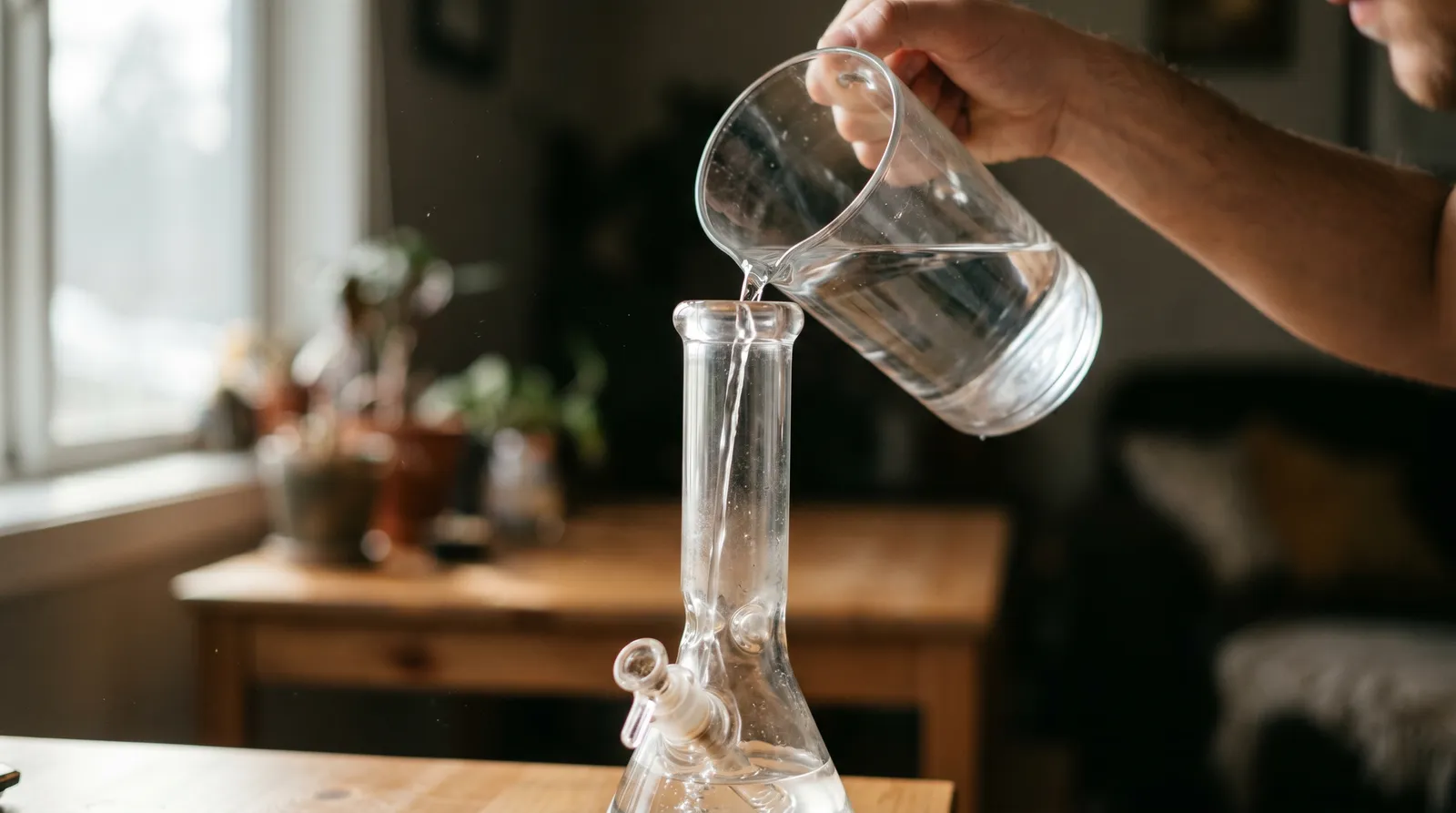
A quick test: put your mouth on the mouthpiece and inhale gently without lighting anything. You should hear the water bubble. If water splashes up into the tube or reaches your lips, pour some out. If nothing bubbles, add more.
For bongs with percolators, you may need to pour water through the top so it reaches the perc chamber. Tilt the piece gently to distribute water evenly. Each percolator disc or tree arm should be just barely submerged.
Water temperature: Room temperature works fine. Some people swear by warm water for a smoother throat feel — the warm vapour is less of a shock to your airways. Cold water with ice (if your bong has an ice catcher, those pinched notches in the neck) cools the smoke further. A 2007 MAPS-sponsored survey of cannabis consumption methods found that water-pipe users self-reported lower rates of respiratory irritation than joint smokers, though the researchers noted the data was self-reported and not clinically verified (Earleywine & Barnwell, 2007).
Step 2: Grind and Pack the Bowl
A medium-coarse grind produces the most even burn and best airflow. Break your herb down to that consistency using a grinder — two or three twists. You're not making powder. You want pieces small enough to burn evenly but large enough that they don't get sucked straight through the hole in the bowl. If you don't yet own a quality herb grinder, you can buy one from the Azarius grinder collection in aluminium and acrylic — worth picking up alongside your bong if you want consistent results.
If your bowl has a large hole at the bottom, drop in a small glass screen or a slightly larger piece of herb as a plug before packing the rest on top. Metal screens work too, though they can affect taste over time. You can order glass screens and metal pipe screens from the Azarius accessories section.
How much to pack: Fill the bowl loosely to just below the rim. Don't press it down hard — airflow is everything. A tightly packed bowl restricts the draw, burns unevenly, and wastes material. Think of it like a loosely filled tea strainer, not a compressed espresso puck. For a solo session, a half-bowl is perfectly fine. There's no rule that says you have to fill it to the brim.
Step 3: Light and Inhale
The correct sequence is flame-to-edge first, then a slow, steady draw. This is where most beginners either rush or overthink it. Here's the sequence:
- Hold the bong with your non-dominant hand around the base or neck. If it has a carb hole, cover it with your finger now.
- Place your mouth inside the rim of the mouthpiece — not over it, inside it. Your lips should form a seal against the inner edge of the tube. If you're blowing air out instead of drawing in, you've got the wrong direction (it happens).
- Bring the flame to the edge of the bowl — not the centre. Lighting only a corner of the packed herb is called "cornering" and it means the bowl lasts multiple hits instead of charring everything in one go. Use a regular lighter or a hemp wick if you want to avoid inhaling butane.
- Inhale slowly and steadily. You should see bubbles forming in the water and smoke filling the chamber. Don't inhale as hard as you can — a gentle, sustained draw pulls more evenly and produces smoother smoke. Think "drinking through a straw," not "trying to suck a golf ball through a garden hose."
- Stop lighting once the herb is cherry-lit (glowing on its own). The ember will keep burning as you draw.
Step 4: Clear the Chamber
Clearing means inhaling all remaining smoke from the tube in one breath by allowing fresh air into the chamber. Once the tube is filled with as much smoke as you want — and you control this; you don't have to fill the entire tube — it's time to clear.
- Carb-hole bongs: Lift your finger off the carb while continuing to inhale. The rush of fresh air pushes the smoke into your lungs.
- Slide-bowl bongs: Pull the bowl out of the downstem while inhaling. Same principle — fresh air enters through the now-open downstem, clearing the chamber.
Don't let smoke sit in the chamber for ages. Stale smoke tastes harsh and has cooled to the point where it's denser and more irritating. Draw, clear, exhale. If you can't clear the chamber in one breath, you've drawn too much smoke — pull the bowl out and cover the mouthpiece with your palm to save the rest for a second inhale.
Exhale normally. Holding smoke in your lungs for longer than a second or two doesn't meaningfully increase absorption — a 1989 study found that roughly 95% of available THC is absorbed within the first few seconds of inhalation (Azorlosa et al., 1992). Holding it in just exposes your lungs to more tar and irritants for no added benefit.
Common Mistakes and How to Avoid Them
The most frequent mistake beginners make is pulling too hard and too fast. Here's the full list of what goes wrong and how to fix it:
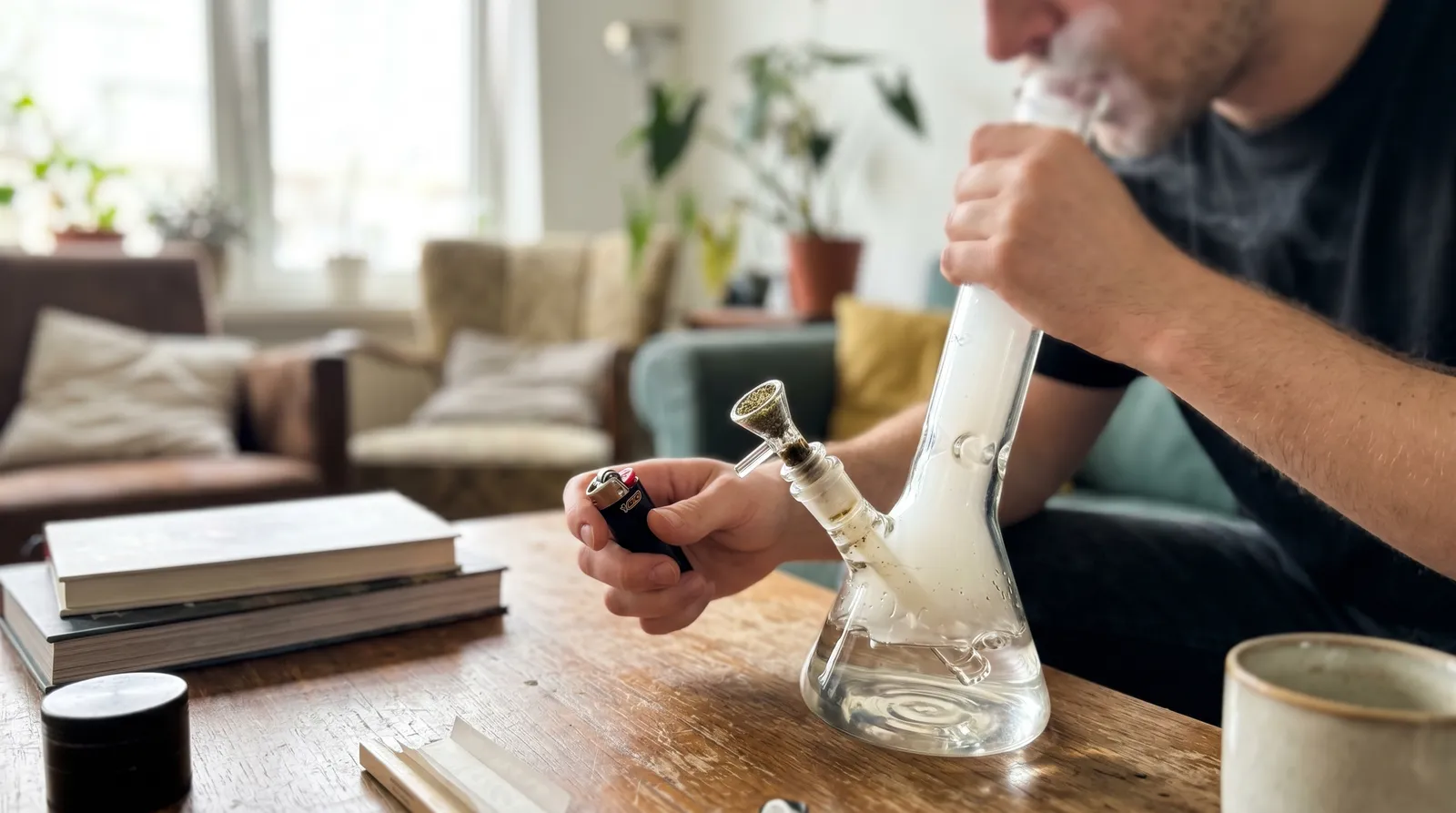
Inhaling before the flame touches the herb. You'll just suck water up the downstem and get nothing. Light first, then draw — or do both simultaneously with a gentle breath.
Packing the bowl too tight. If you have to pull hard enough to make your ears pop, it's too tight. Loosen it up. Airflow is the single biggest factor in a smooth hit.
Filling the water too high. If water reaches the bowl or splashes into your mouth, you've overfilled. The downstem needs to be submerged, but just barely.
Taking massive rips on the first try. A chamber full of dense smoke will make almost anyone cough violently. Start with a quarter-chamber and work up. There's genuinely no reason to fill the entire tube on your first attempt — it doesn't prove anything except that you enjoy coughing.
Not cleaning the bong. Residue builds up fast. After 3–5 sessions, the water turns brown, the glass gets sticky, and every hit tastes like an ashtray. Change the water after every session. Deep-clean weekly with isopropyl alcohol (90% or higher) and coarse salt — pour both in, cover the openings, shake vigorously, rinse thoroughly with hot water. A study published in the Journal of the American Medical Association noted that dirty water pipes can harbour bacteria and fungi, including species of Aspergillus, which pose respiratory risks particularly for immunocompromised users (Verweij et al., 2000). You can get dedicated bong cleaning kits and brushes from the Azarius accessories section to make the job easier.
Ignoring the downstem seal. If the downstem doesn't sit snugly in the joint (the glass-on-glass connection point), air leaks in and you lose suction. Rubber grommets on acrylic bongs wear out — replace them when they get loose. Glass-on-glass joints should be kept clean so they seat properly.
Tips for Smoother Hits
Cornering the bowl is the single easiest improvement most people can make. Already mentioned, but worth repeating. Light only a wedge of the surface each time. Everyone sharing the bowl gets a green (fresh) hit instead of just the first person.
Use an ice catcher if you have one. Drop 2–3 ice cubes into the neck. The smoke passes over the ice on its way up, cooling it significantly. Be aware that as the ice melts, the water level in the chamber rises — don't overfill at the start.
Match your breath to the bubbles. A steady, moderate draw produces fine bubbles and smooth smoke. A violent pull creates large bubbles that don't filter as effectively and delivers hotter, harsher smoke.
Grind consistency matters more than you think. Too fine and the herb pulls through the hole or clogs the screen. Too coarse and it burns unevenly, leaving half the bowl unsmoked. Medium-coarse — roughly the texture of dried oregano — is the sweet spot, though exact grind size varies slightly depending on your bowl's hole diameter.
Hemp wick vs. lighter. A butane lighter works fine. A hemp wick (a length of hemp string coated in beeswax) gives you a lower-temperature flame and avoids inhaling butane fumes. The practical difference is subtle, but some people — particularly those who use bongs daily — notice a cleaner taste. You can buy hemp wick rolls from the Azarius accessories range if you want to try for yourself.
Quick Comparison: Bong Materials
Borosilicate glass is the most popular bong material because it offers the cleanest taste and easiest cleaning, but it is also the most fragile. Here's how the main materials compare:
| Material | Durability | Taste | Cleaning | Best for |
|---|---|---|---|---|
| Borosilicate glass | Fragile — one drop and it's done | Clean, no flavour transfer | Easy — alcohol + salt | Home use, flavour chasers |
| Acrylic | Very tough | Slight plastic taste, especially when new | Moderate — avoid alcohol (damages acrylic) | Travel, budget, clumsy hands |
| Silicone | Nearly indestructible | Minimal flavour transfer | Easy — dishwasher safe (most models) | Outdoor use, portability |
| Ceramic | Moderate — heavy but breakable | Clean | Harder — opaque, can't see residue | Display pieces, home use |
Glass is the standard for a reason — it doesn't affect taste and you can see exactly how dirty it is (which motivates you to clean it). Acrylic is forgiving and cheap, but the taste trade-off is real. Silicone has come a long way and is genuinely practical if you're not using it at home. If you're looking to buy your first bong, the Azarius bong collection includes glass, acrylic, and silicone options across a wide price range.
Bong vs. Joint vs. Dry Pipe: Honest Comparison
A bong delivers cooler, smoother smoke than a joint or dry pipe, but it is not a "safe" way to smoke. Water filtration removes some particulate matter and water-soluble toxins, but it does not eliminate tar, carbon monoxide, or all carcinogens. If harm reduction is your primary concern, a dry-herb vaporizer is a better choice — vaporizers heat herb below combustion temperature, producing vapour rather than smoke. The Azarius vaporizer wiki covers that topic in detail.
That said, bongs have practical advantages: they're more efficient per gram than joints (less sidestream waste), they cool the smoke meaningfully, and they let you control dose size hit by hit. Dry pipes are more portable but offer no water filtration. Joints require no equipment but burn continuously whether you're inhaling or not, wasting material. There's no single "best" method — it depends on your priorities.
Choosing Your First Bong
The best first bong for most people is a simple straight-tube or beaker-base glass bong between 25 and 35 cm tall. Anything smaller is hard to use comfortably; anything larger produces more smoke than a beginner can clear. A basic glass beaker bong with a removable downstem and bowl — no percolators, no ice catcher, no fancy additions — teaches you the fundamentals without extra complexity. Once you're comfortable with the basics, you can explore percolator bongs, recyclers, or multi-chamber designs. The Azarius bong collection is a good place to start browsing — you can filter by material, size, and price to find something that fits your situation.
Last updated: April 2026
Preguntas frecuentes
8 preguntasHow much water should I put in a bong?
Does holding in bong smoke get you higher?
How often should I change bong water?
What is cornering a bong bowl?
Is warm or cold water better in a bong?
Why does my bong hit taste bad?
How do I stop coughing when hitting a bong?
Can I use a bong without a carb hole?
Sobre este artículo


Joshua Askew serves as Editorial Director for Azarius wiki content. He is Managing Director at Yuqo, a content agency specialising in cannabis, psychedelics and ethnobotanical editorial work across multiple languages. Th
Este artículo wiki se ha redactado con ayuda de IA y ha sido revisado por Joshua Askew, Managing Director at Yuqo. Supervisión editorial a cargo de Adam Parsons.
Aviso médico. Este contenido es únicamente informativo y no constituye asesoramiento médico. Consulta a un profesional sanitario cualificado antes de consumir cualquier sustancia.
Última revisión 24 de abril de 2026
References
- [1]Rickert, W.S., Robinson, J.C., & Rogers, B. (2000). A comparison of tar, carbon monoxide and pH levels in smoke from marijuana and tobacco cigarettes. Canadian Journal of Public Health, 91(4), 306–308.
- [2]Earleywine, M. & Barnwell, S.S. (2007). Decreased respiratory symptoms in cannabis users who vaporize. Harm Reduction Journal, 4, 11.
- [3]Azorlosa, J.L., Greenwald, M.K., & Stitzer, M.L. (1995). Marijuana smoking: effects of varying puff volume and breathhold duration. Journal of Pharmacology and Experimental Therapeutics, 272(2), 560–569.
- [4]Verweij, P.E., Kerremans, J.J., Voss, A., & Meis, J.F.G.M. (2000). Fungal contamination of tobacco and marijuana. JAMA, 284(22), 2875.
Artículos relacionados
Cómo hacer space cake en casa
Un space cake es un bizcocho o brownie infusionado con THC a través de mantequilla o aceite de cannabis. Según Hoch et al.
Cómo hacer gominolas de THC en casa: guía técnica
Guía paso a paso para preparar gominolas de THC en casa: descarboxilación, infusión, cálculo de dosis y seguridad, con referencias clínicas.
Cómo secar cannabis: guía técnica en 7 pasos
Protocolo de secado de cannabis en 7 pasos: humedad, temperatura, prueba del chasquido y errores habituales. Guía técnica de postcosecha.
Cómo hacer hash brownies: guía paso a paso
Guía completa para preparar hash brownies: descarboxilación, cálculo de dosis, horneado y seguridad basada en literatura científica.
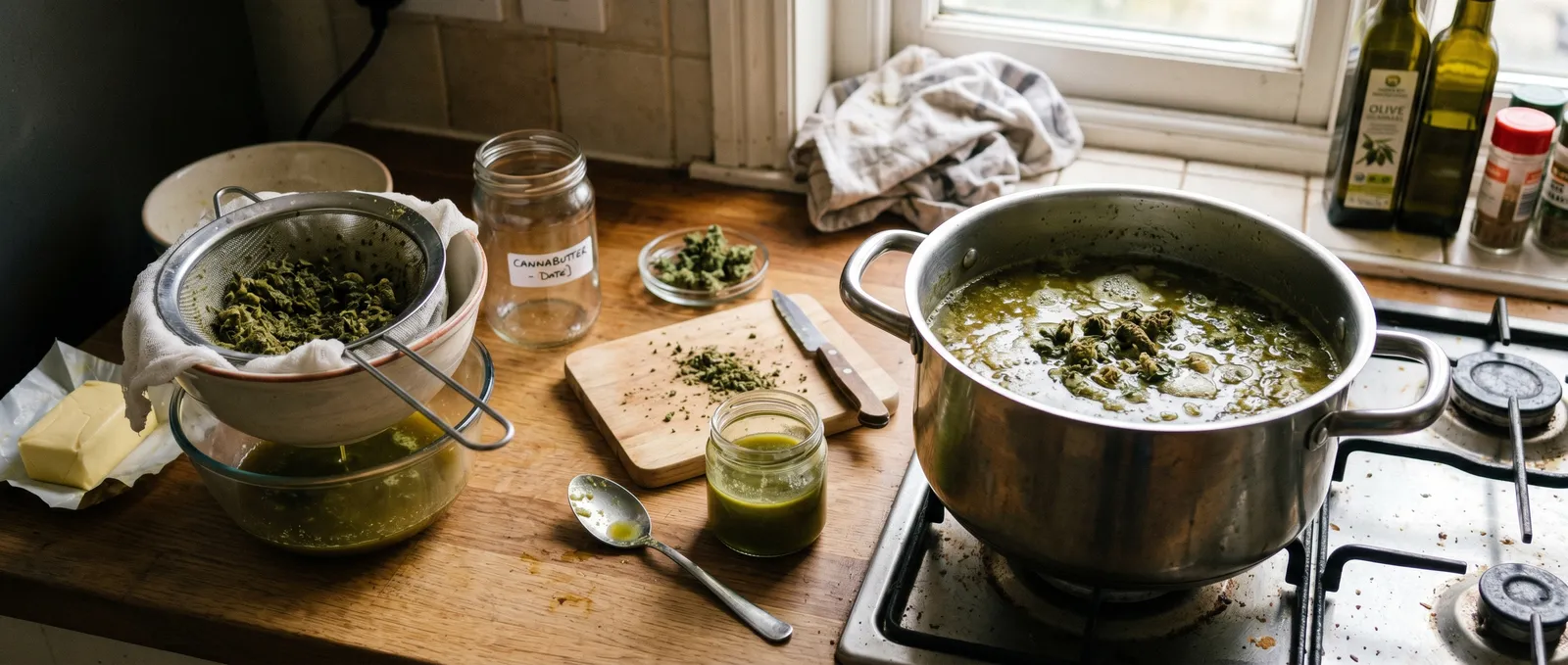
Cómo hacer mantequilla de cannabis — guía técnica
Guía técnica paso a paso para preparar mantequilla de cannabis en casa: descarboxilación, infusión, temperaturas, conservación y seguridad.
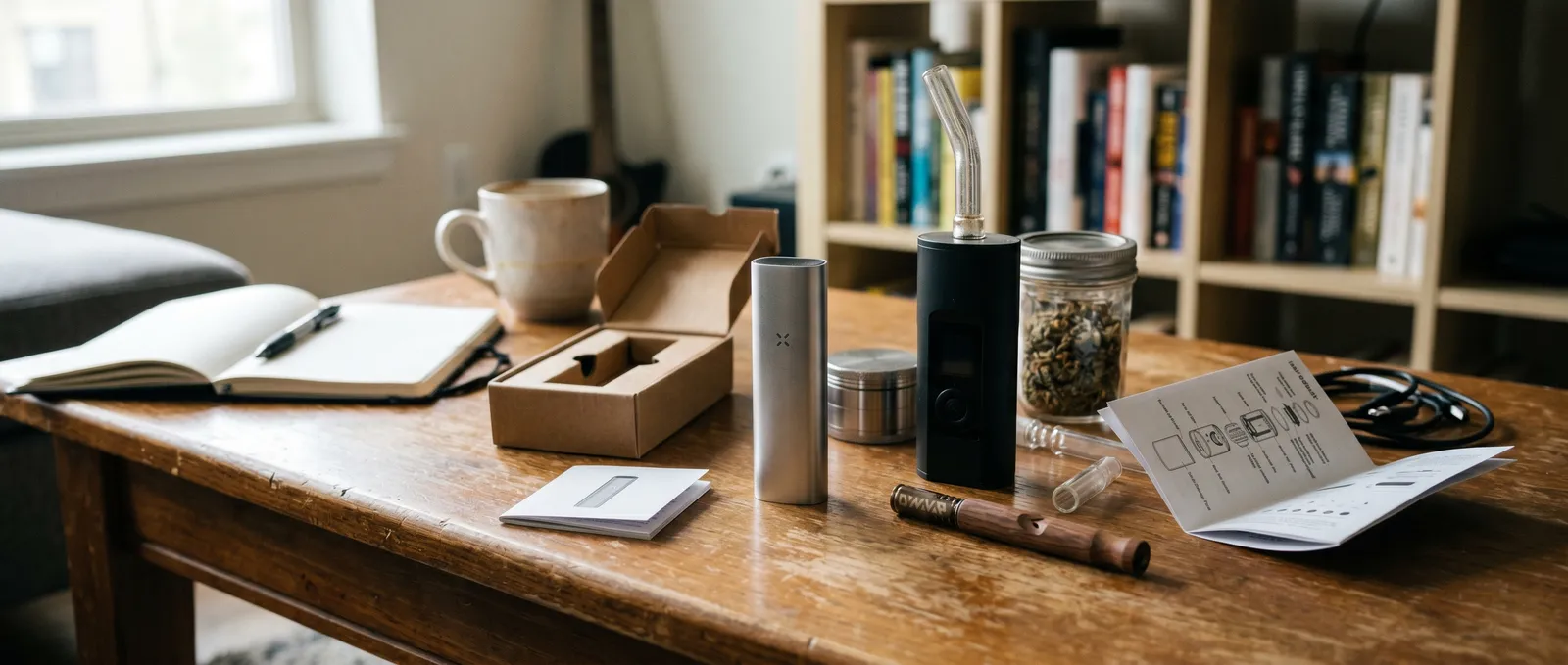
Cómo elegir un vaporizador: guía paso a paso
Guía práctica para elegir el vaporizador adecuado según material, calentamiento, temperatura y presupuesto. Con datos de estudios clínicos.
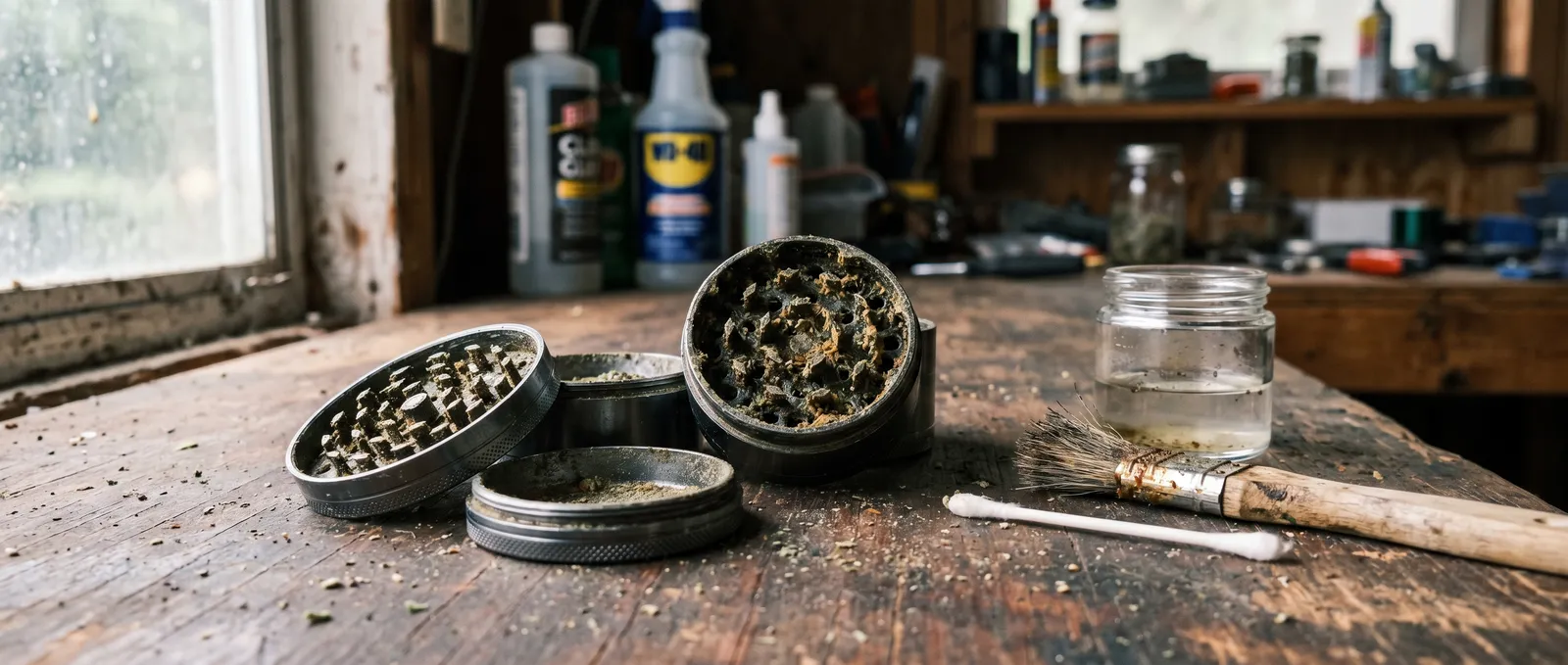
Cómo limpiar un grinder
Un grinder es una herramienta con dientes entrelazados que desmenuza material vegetal seco en partículas uniformes.
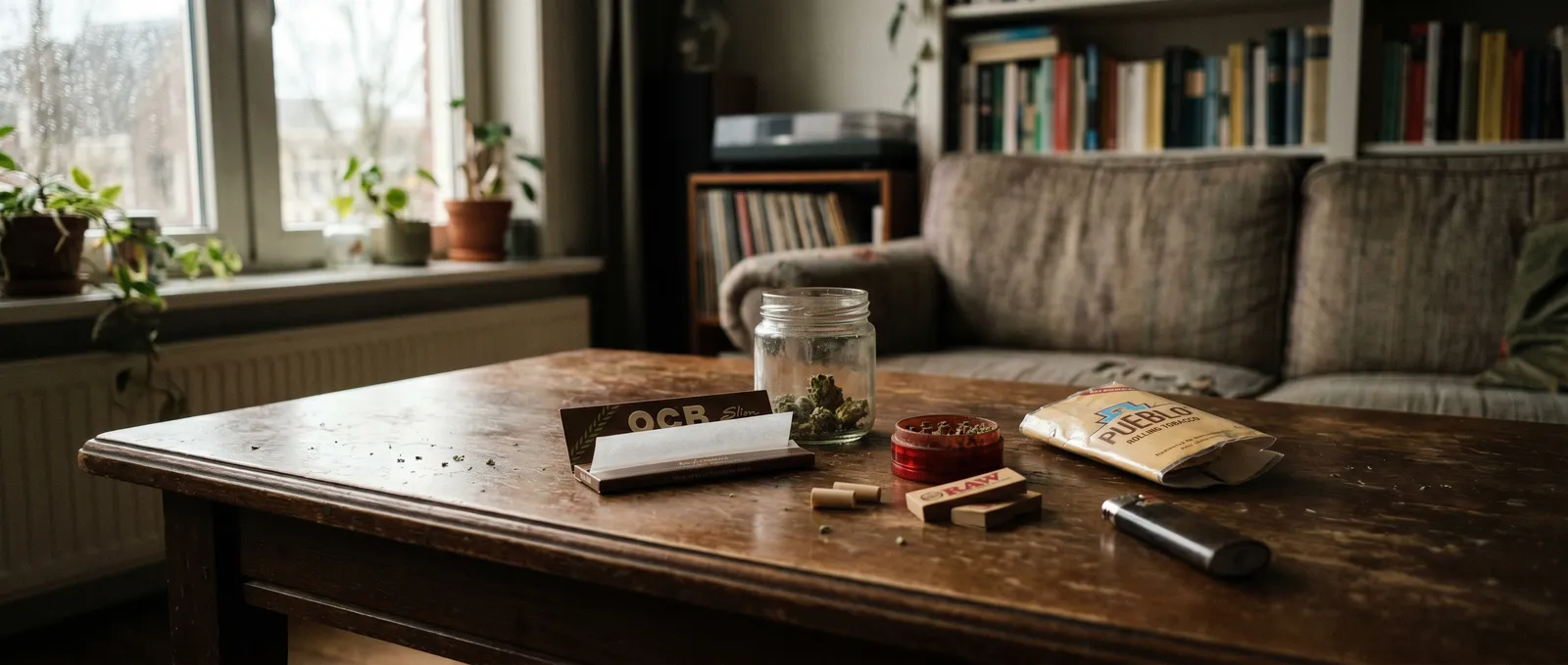
Cómo liar un porro
Liar un porro consiste en enrollar cannabis molido dentro de un papel de fumar fino junto con un filtro de cartón para formar un cilindro fumable.
Cómo conservar cannabis correctamente
La conservación del cannabis es la práctica de controlar cuatro variables ambientales —luz, temperatura, humedad y exposición al aire— para frenar la…